
(NEW YORK) — President Donald Trump rushed to enact new tariffs and vowed to preserve others after a recent Supreme Court ruling knocked out most of his levies.
Businesses and consumers now face a different set of tariffs, which amount to taxes paid by importers for goods shipped into the U.S. Oftentimes, importers pass along tariff-related costs to consumers, raising retail prices.
The nation’s overall tariff rate has dropped, meaning some products have gained relief from tariff-related price pressures, some analysts told ABC News. But levies remain in place for nearly all imported goods, including duties as high as 50%, hiking costs for some companies and shoppers, they added.
“In general, we’ve seen tariffs pushing up on prices. That won’t go away,” Jason Miller, a professor of supply chain management at Michigan State University, told ABC News.
The high court ruled on Friday that the International Emergency Economic Powers Act (IEPPA) does not authorize Trump to impose levies, nullifying 70% of Trump’s tariffs after they collected more than $140 billion through December, the Yale Budget Lab found.
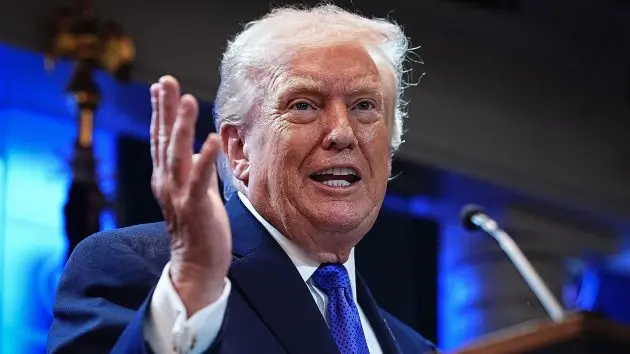
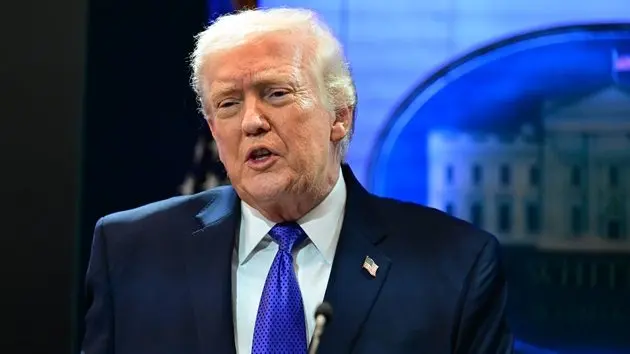
During his State of the Union speech on Tuesday, Trump criticized the Supreme Court decision, describing at as a “very unfortunate ruling,” and asserting that he retains the ability to impose tariffs under “fully approved and tested alternative legal statutes.”
In a social media post on Monday, Trump affirmed what he said was his authority to issue tariffs, saying he does not need to consult Congress before erecting new trade levies.
Trump also reiterated his commitment to his policy approach, warning other countries that they may face a “much higher Tariff, and worse.”
A 10% global tariff took effect on Tuesday, marking the first duty enacted by Trump since the high court’s decision. Trump issued the levy under Section 122 of the Trade Act of 1974, which allows the president to hike tariffs for 150 days as means of addressing “large and serious” balance-of-payments deficits, or disparities between a country’s total payments in transactions with other nations and its total earnings. In order to extend the Section 122 tariffs beyond 150 days, Trump would need to secure congressional approval.
Senate Minority Leader Chuck Schumer, D-N.Y., said this week that Democrats would oppose an extension of Section 122 tariffs, which could deny Trump the 60 votes necessary to overcome a potential Senate filibuster.
Trump has vowed to hike the Section 122 tariff to 15%. As of Tuesday, however, the president had not issued an order formalizing that increase.
A 15% Section 122 tariff would result in price increases amounting to $800 in additional costs for an average U.S. household over the next 150 days, the Yale Budget Lab projected.
“That’s hundreds of dollars that you’re going to be paying as a result of these tariffs,” Raymond Robertson, professor for trade, economics and public policy at Texas A&M University, told ABC News.
Robertson noted the ultimate cost impact may be slightly lower than projected as consumers shift away from products that display noticeable tariff-induced price hikes. But, he added, tariff-impacted products will be all but impossible for shoppers to avoid.
“These tariffs are hitting across the board,” Robertson said.
The Trump administration also plans to maintain sector-specific tariffs imposed under Section 232 of the Trade Expansion Act of 1962 and conclude pending investigations that could authorize additional levies, U.S. Trade Representative Jamieson Greer said in a statement on Friday.
That statute permits the White House to levy tariffs on products of importance to national security. Under the law, the White House must await the result of an investigation undertaken by the Commerce Department before imposing a tariff.
Under Section 232, for instance, steel and aluminum face a 50% tariff, putting upward pressure on prices for tableware, motorcycles, canned goods and assorted children’s products, analysts previously told ABC News.
A 50% tariff also applies to some copper products, while 25% tariffs remain for cars and auto parts. Those levies exclude a host of goods compliant with the United States-Mexico-Canada Agreement, or USMCA, a free trade agreement.
To be sure, some products will experience a reduction of tariffs in the aftermath of the Supreme Court decision. Products from China, Brazil, Vietnam and India will likely gain notable tariff relief, since those nations faced significant tariffs under the legal authority that was struck down by the Supreme Court, Miller said.
Electronics and clothing are among the products that could benefit from softer tariffs.
If the Supreme Court had opted to uphold tariffs issued under IEPPA, the nation’s effective tariff rate would have remained at 16%, the Yale Budget Lab said. Taking into account Section 122 tariffs, the effective tariff rate now stands at 13.7%, the group said.
“The good news for consumers is there’s an overall decrease in tariff rates,” Miller said. “What creates a challenge is we don’t know exactly what the new landscape will look like.”
Copyright © 2026, ABC Audio. All rights reserved.